Odoo Electronic Invoicing in the Netherlands, Peppol-Ready and Compliant
Keep Odoo as your invoicing system and add a Peppol access point and validation layer for Dutch e-invoicing. Advintek connects to Odoo Invoicing and Accounting, validates each invoice against NLCIUS and Peppol BIS 3.0 (based on EN 16931), and delivers it through Peppol or Digipoort. This covers suppliers to Dutch government bodies today and prepares you for wider B2B e-invoicing.

Improve Financial Visibility
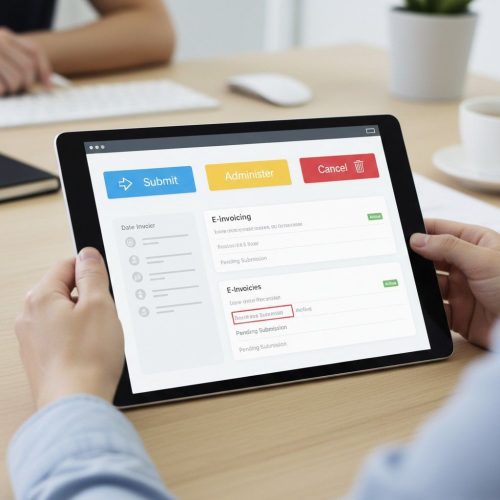
Track every e-invoice from creation to delivery in one dashboard. Get clearer control over receivables, payables and reconciliation, and spot rejected invoices early.
Reduce Compliance Risk
Automated Peppol BIS 3.0 and NLCIUS validation checks each invoice before it is sent. Validated records and structured archives improve audit readiness and simplify reporting.
Make Better Business Decisions
Connect invoice data to your ERP and accounting system to see payment trends, outstanding balances and processing times, and plan cash flow with confidence.
Why Dutch Businesses Using Odoo Need More Than a PDF Invoice
Odoo creates invoices well, but Dutch buyers, especially public bodies, need structured, validated e-invoices that arrive at the right endpoint. A PDF emailed from Odoo is not an e-invoice. Without a connected Peppol or Digipoort route, rejected invoices, manual re-keying and delayed payments are common.
- Improve Financial Visibility- Track every invoice from Odoo to delivery in one dashboard. See which invoices were delivered, accepted or rejected, and fix errors before they hold up payment.
- Reduce Compliance Risk- Each invoice is checked against NLCIUS and Peppol BIS 3.0 rules before sending. Validated records and a structured archive support audits and BTW reporting.
- Keep Your Odoo Workflow- Your team keeps invoicing in Odoo. Advintek takes the invoice data, converts it to valid Peppol UBL and handles transmission and status updates.
Electronic Invoicing in the Netherlands: What Odoo Users Should Know
- Government buyers (B2G): Dutch ministries, municipalities and other public bodies must be able to receive e-invoices (EU Directive 2014/55/EU, EN 16931). Suppliers invoice them electronically, via Peppol or Digipoort.
- Business customers (B2B and B2C): E-invoicing is currently voluntary and depends on the buyer’s agreement. A wider B2B mandate is expected, with 2030 widely discussed.
- Routing: Invoices travel over Peppol using NLCIUS or Peppol BIS 3.0. Central government bodies are addressed with an Organisation Identification Number (OIN), so the OIN or Peppol ID must be captured correctly on the customer record.
Common Odoo E-Invoicing Gaps We Solve
- Missing or wrong OIN, KvK or Peppol participant ID on customer records
- Invoices that fail validation at the buyer or Digipoort
- No clear status or rejection tracking after the invoice leaves Odoo
- Credit notes and corrections that must be re-created manually
- Archiving that does not support audit retrieval
How Advintek Works with Odoo in the Netherlands
- Connect: Link Odoo (Community, Enterprise or Odoo.sh) to Advintek.
- Validate: Each invoice is checked against NLCIUS and Peppol BIS 3.0 before sending.
- Convert: Invoice data becomes valid Peppol UBL.
- Deliver: Invoices are sent through Peppol or to Digipoort, using OIN routing where needed.
- Track: Acceptances, rejections and errors are reported back as they happen.
- Archive: Every invoice is stored in a structured, audit-ready archive.
Credit notes, corrections and cancellations are handled without re-keying.
Dutch Tax Compliance and BTW Reporting with Odoo
Dutch businesses must keep accurate invoice records and report BTW (VAT) correctly. Advintek keeps invoice data structured, validated and easy to retrieve, so high volumes and tight deadlines don’t put compliance at risk.
- Handles high-volume, multi-customer invoicing
- Keeps BTW reporting data structured and ready for filing
- Stores every invoice in an automatic audit archive (Dutch fiscal record-keeping generally requires 7 years)
- Reduces manual checking and correction work
Odoo’s Built-In E-Invoicing vs. Advintek
UBL Generation: Standard UBL vs. NLCIUS & BIS 3.0 validated invoices.
Validation: Limited reporting vs. detailed invoice-level validation.
Tracking: Basic status vs. full lifecycle tracking.
Rejections: Manual handling vs. real-time rejection alerts.
Routing: Configuration-dependent vs. Digipoort & OIN support.
Integration: Odoo-only vs. multi-ERP support.
Set Up Compliant Odoo E-Invoicing for the Netherlands
Share your Odoo version and invoice volume, and we’ll show how Peppol connection, validation and reporting would work for your business. Request a demo
Everything You Need to Know
Does Odoo support e-invoicing in the Netherlands?
Yes. Recent Odoo versions can generate UBL invoices, and Odoo offers Peppol and Dutch formats. Many businesses still add a validation and delivery layer for Digipoort routing, error tracking and audit archiving.
Is e-invoicing mandatory in the Netherlands?
For suppliers to government bodies (B2G), yes, since public bodies must be able to receive e-invoices. For B2B it is currently voluntary, though a wider mandate is expected.
Can I send Odoo invoices to Digipoort?
Yes. Advintek acts as a Peppol access point and delivers invoices to government endpoints such as Digipoort, using OIN routing where needed, with no manual file conversion.
Which formats are supported?
Peppol BIS Billing 3.0 UBL and NLCIUS, both based on EN 16931.